Firmware for the Turing Pi 2 that undoes its own mistakes
Upstream's last release was February 2025 and the maintainer moved on. A bad flash still meant a trip to the rack, an update still power-cycled all four compute modules, and the board's own temperature sensor was not in the device tree. This fork picks it up on a kernel that is still supported.
18 / 1promotions / rollbacks — read off the board. The rollback is the point: a firmware that has never had to undo itself has not been shown able to.
6.12 LTSkernel, on Buildroot 2025.02 LTS. Upstream ships 6.8 on an end-of-life Buildroot.
0 modulespower-cycled by a firmware update. Upstream cuts all four.
-
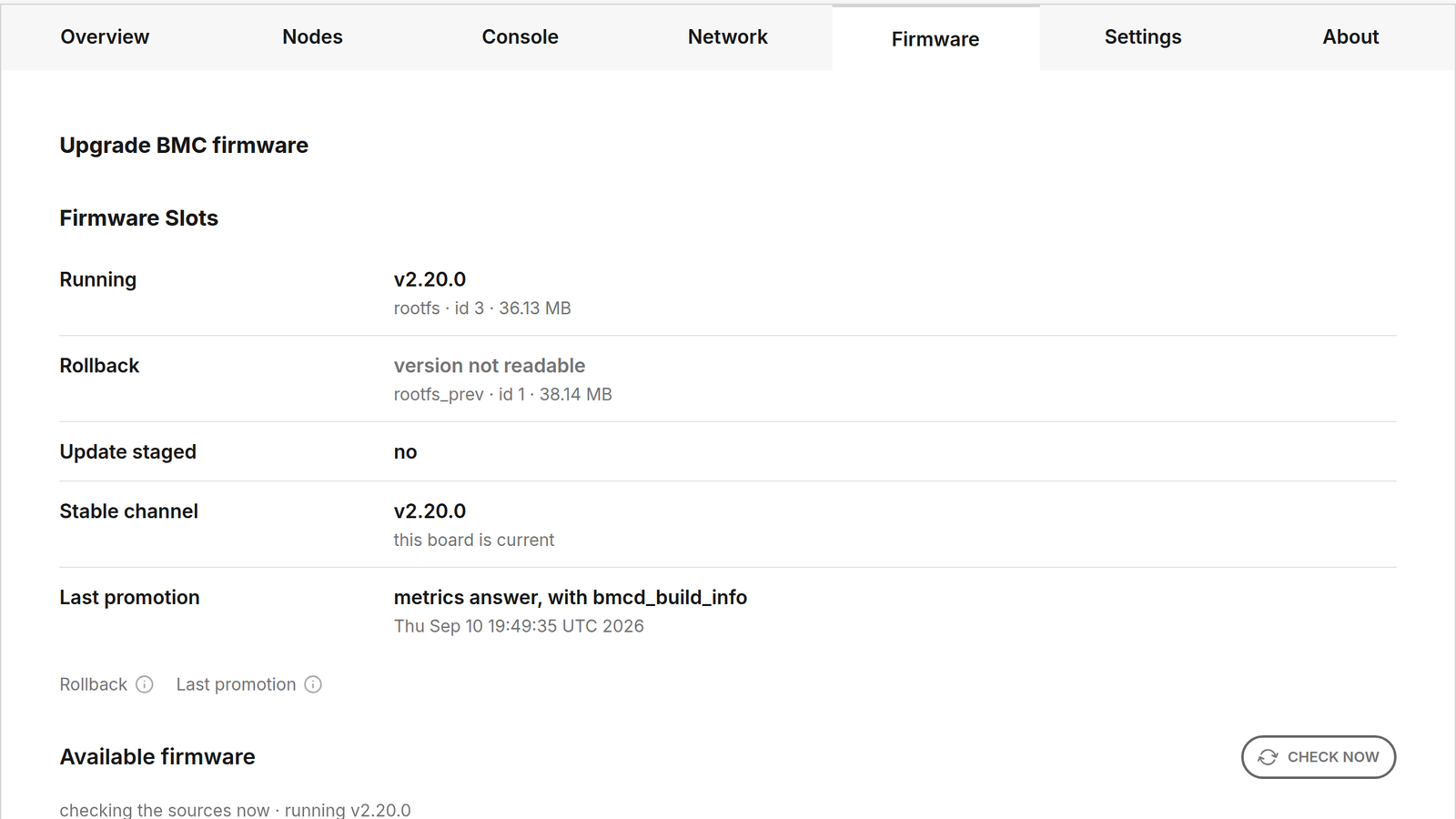
Boots the new image tentatively; keeps it only if the daemon answers and every module's port is present.
-
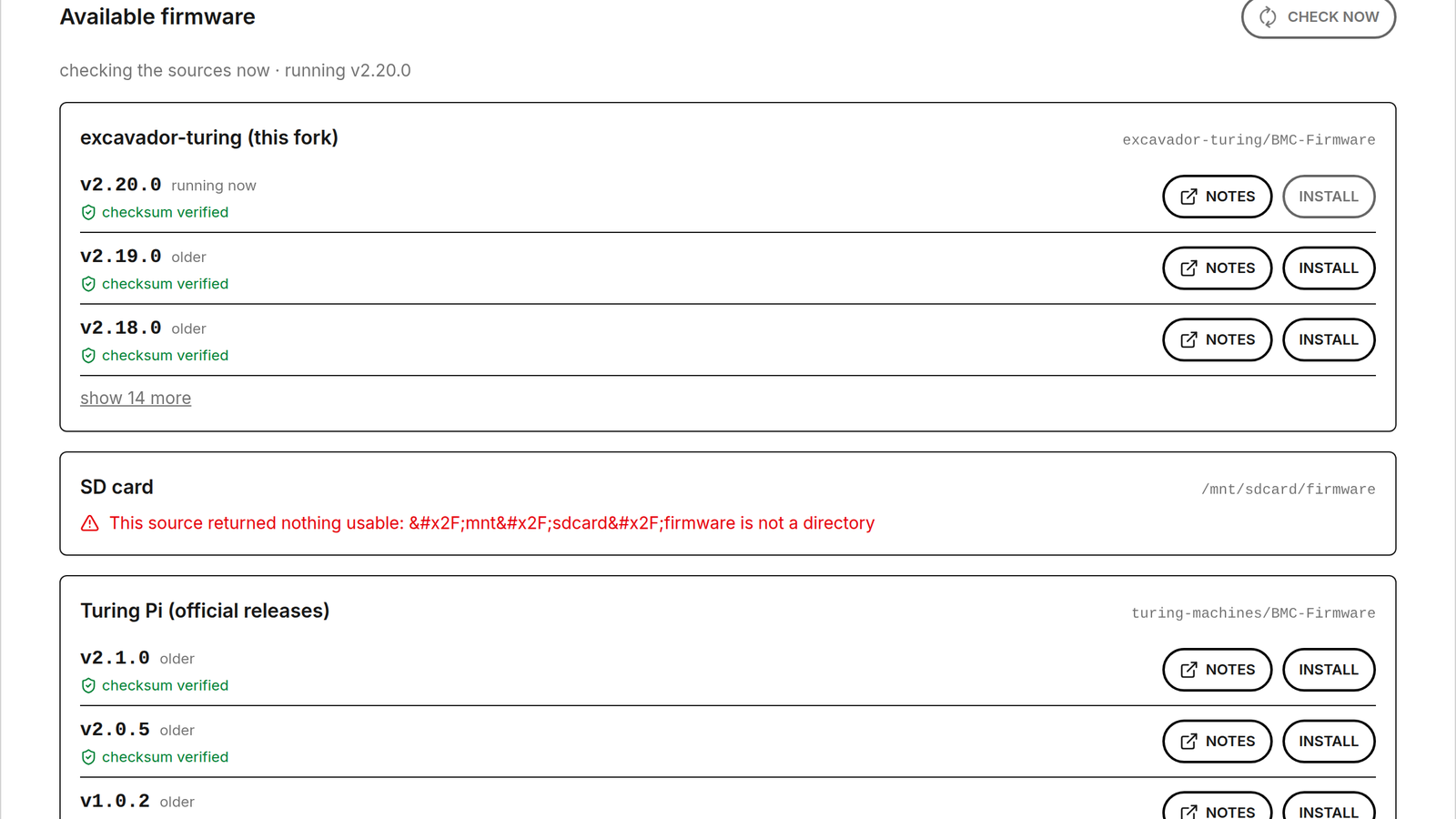
This fork, upstream's two catalogues, or the SD card — side by side, each checksum-verified or marked as not.
-
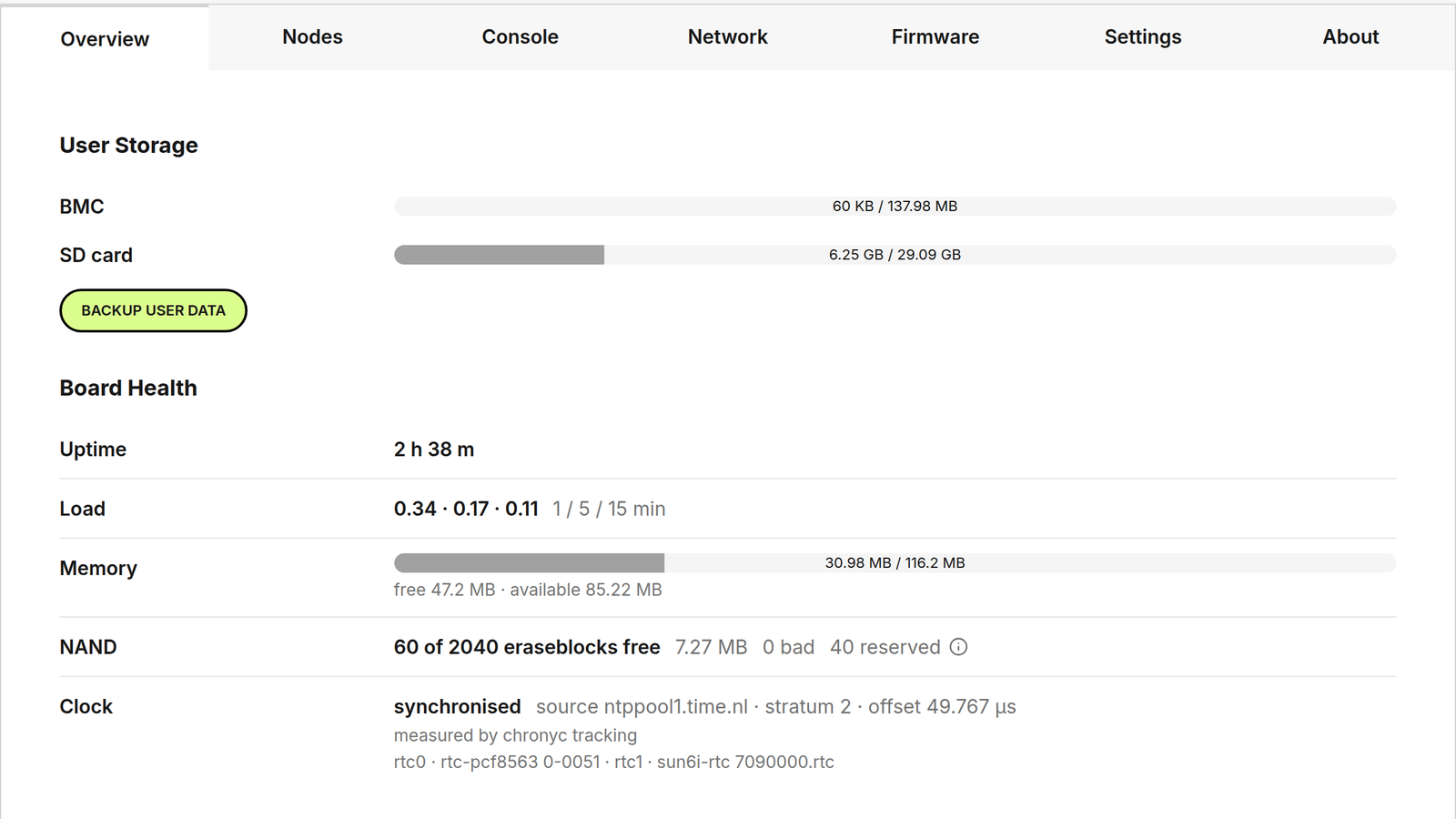
The temperature sensor upstream never described, which trip point set the fan, NAND wear, and what the clock is synced to.
-
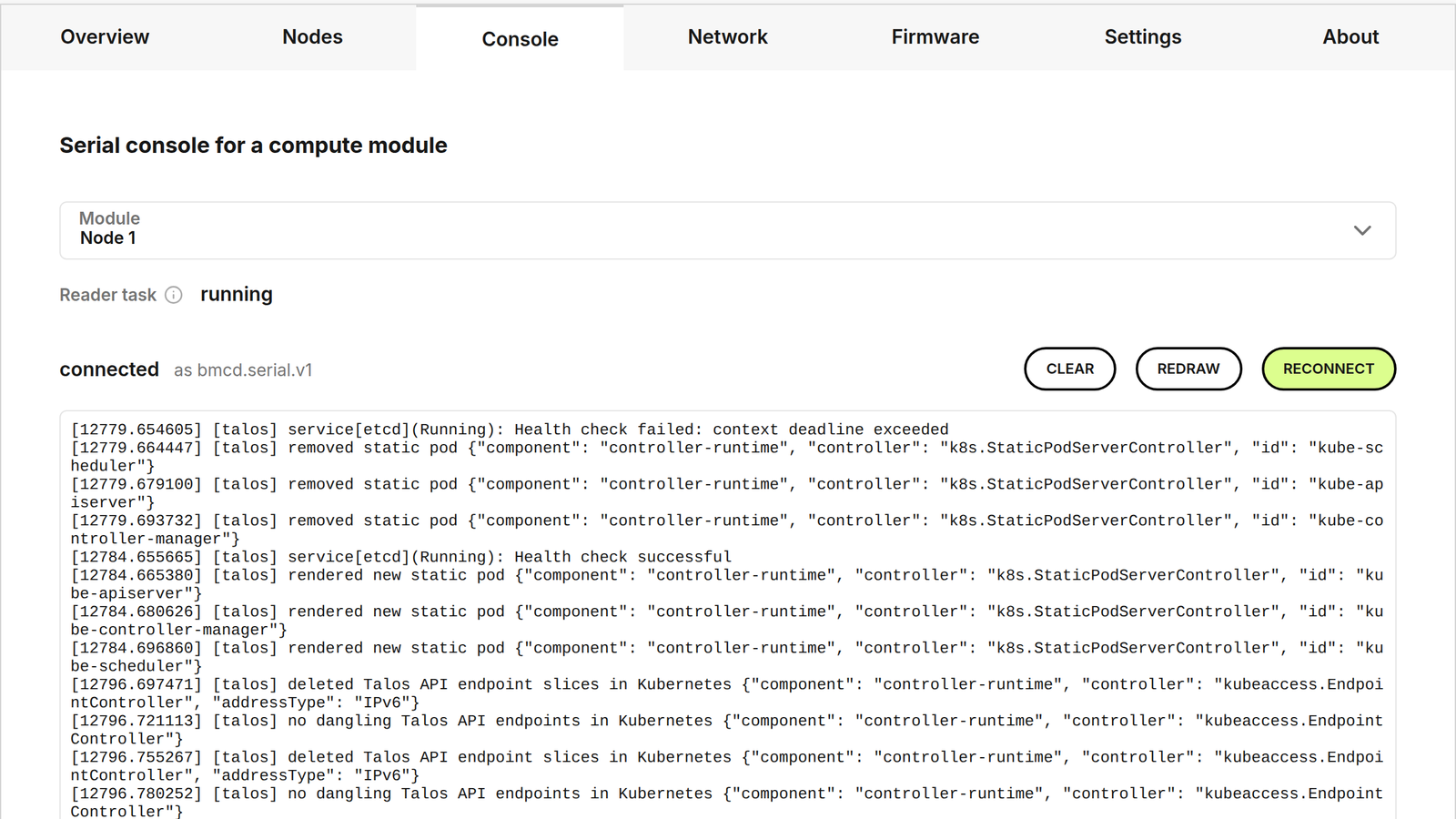
Four serial consoles in the browser, no header, no adapter — each opens on the module's recent output.
-
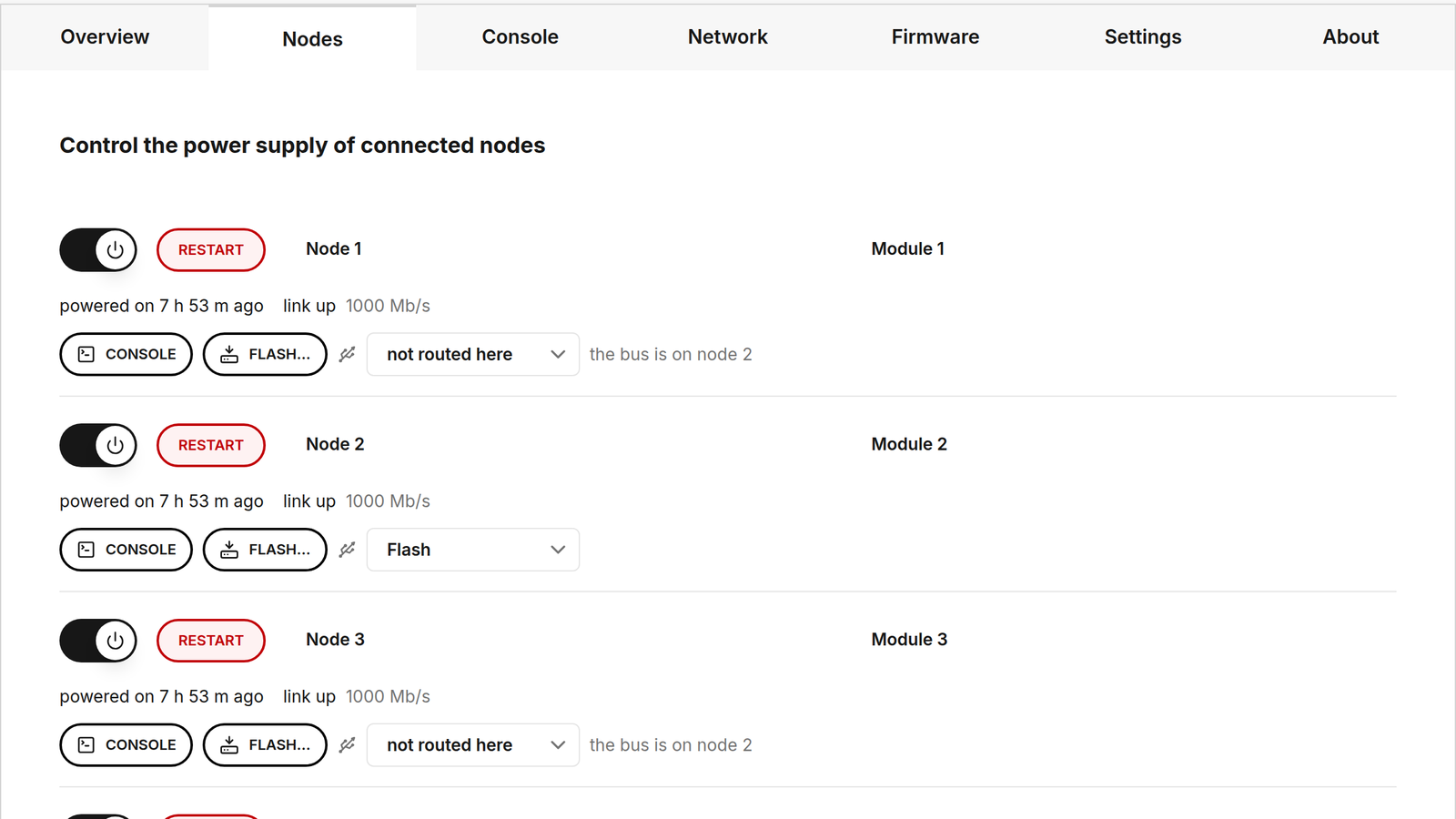
Power, reset, USB routing and flashing — and a flash that refuses a module it cannot positively identify.
-
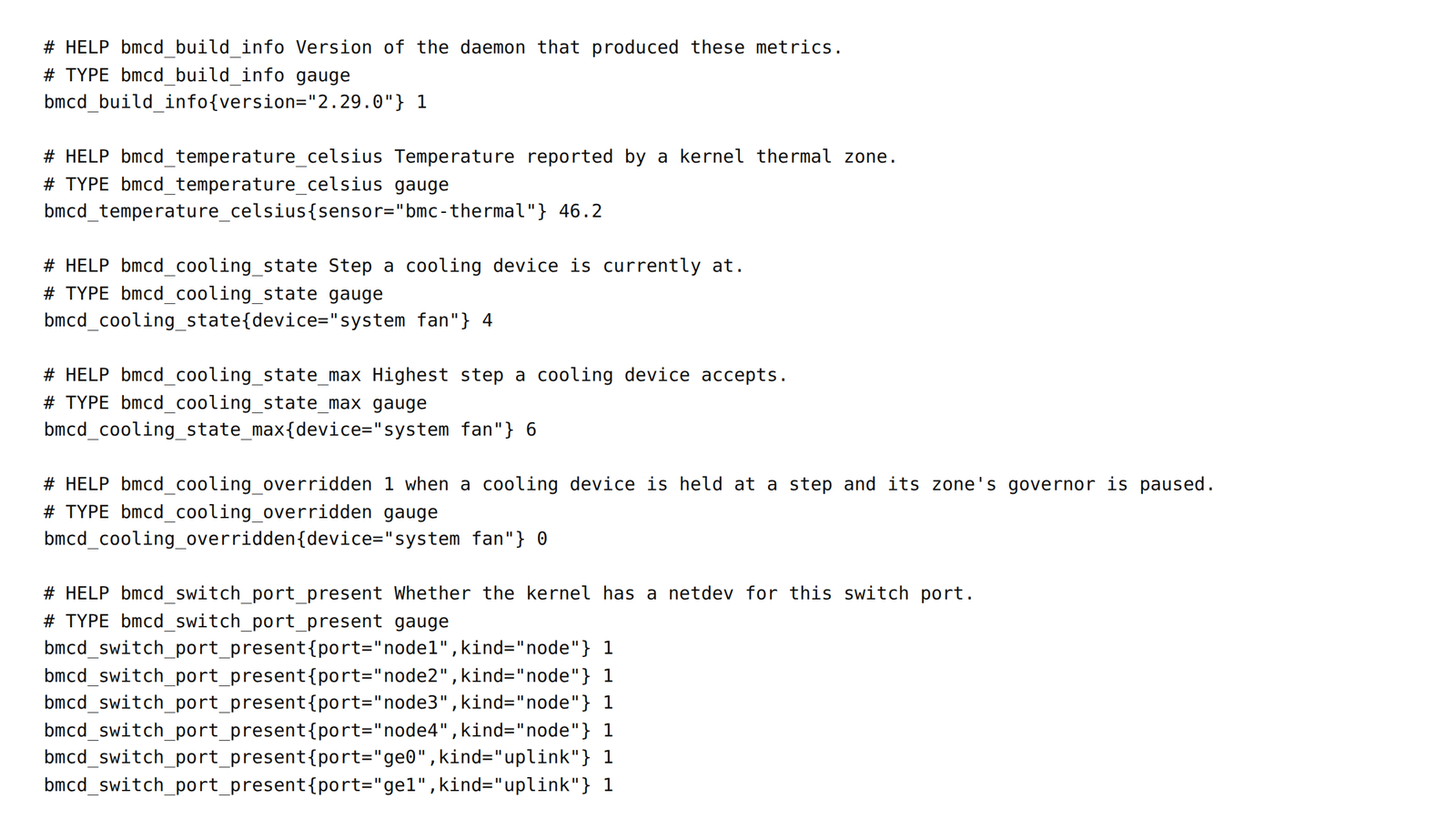
Every family the board exposes, on a listener that serves nothing else — so a scraper never holds the root password.
-
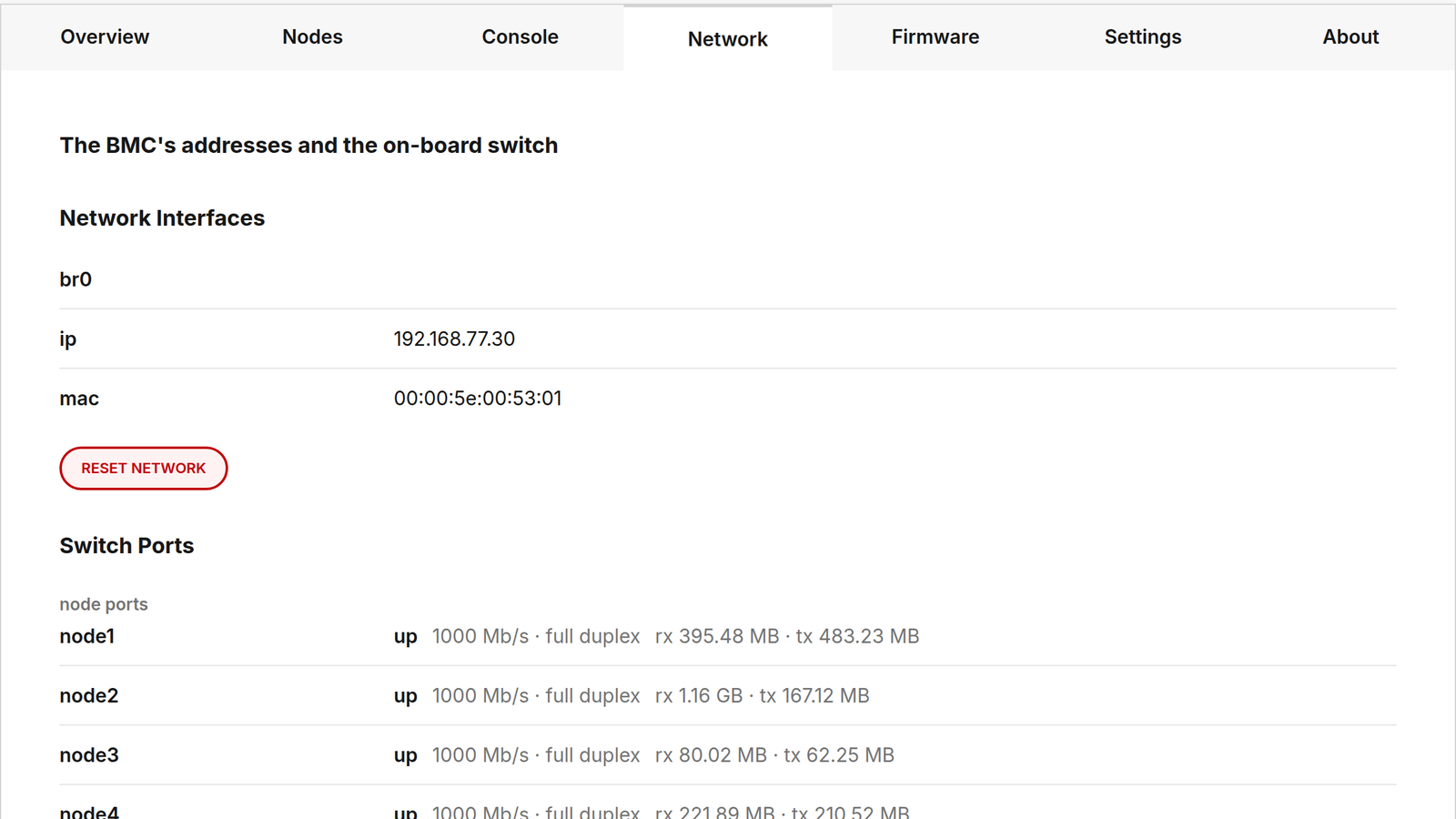
Interfaces, addresses, and an NTP source you can set — and see whether it is actually synchronised.
-
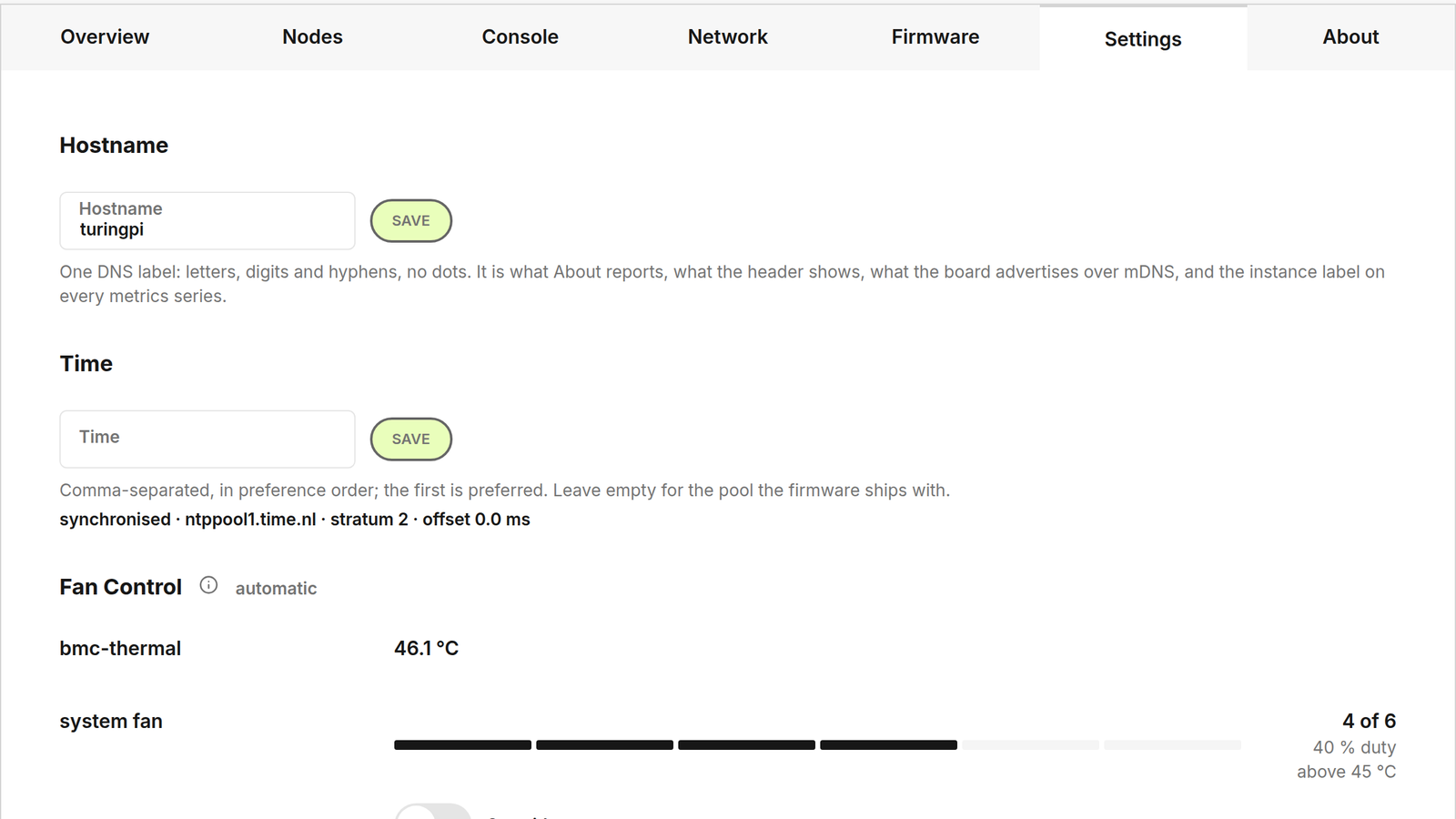
Hostname, clock and configuration are controls, not files on a shell — and
tpireaches every one from a terminal.
Why fork it
Upstream is dormant. Its firmware mirror stops at v2.0.5, while its GitHub releases reach v2.1.0 — the same publisher, two catalogues that disagree. Following the documented update path would downgrade a board running anything newer.
That mattered because the board had real problems: a firmware update power-cycled the compute modules, there was no temperature sensor anywhere, the fan ran flat out with nothing to regulate against, and a bad image meant a trip to the rack.
What changed
| upstream | this fork | |
|---|---|---|
| Kernel | 6.8, not a longterm release | 6.12.109 LTS |
| Buildroot | 2024.05.1 (EOL) | 2025.02.17 LTS |
| Bad image recovery | power cut | health-gated A/B promotion |
| Firmware update vs modules | power-cycles them | rails untouched |
| Board temperature | none — no sensor in the device tree | read, with its trip points |
| Fan | fixed persisted speed | kernel-driven, and it says why |
| Metrics | none | a documented catalogue |
| Scrape endpoint | — | its own port, which cannot reach /api/bmc |
| Published checksums | none | SHA256SUMS per release, verified on download |
| Serial console | serial header on the board | per module, in the browser |
| Firmware sources | one, hard-coded | configurable; GitHub, HTTP, or SD card |
| API description | a prose page | OpenAPI 3.1, served by the board itself |
| Command line | upstream's tpi, unaware of any of this |
tpi reaches every endpoint above |
The full comparison carries the evidence for each row, including the ones where upstream is ahead.
Start here
- Install — putting this on your own board
- Recover a bad flash — what to do when it goes wrong
- Developing — build it, and iterate without cutting a release
- What is and isn't fixed — the honest list, with tickets
Read the fault list before you rely on this
The certificate on the board is expired. Anything running locally on the
BMC is trusted without a credential, though since v2.14.0 it at least
leaves an audit line saying so. Nothing shuts the board down if it
overheats — there is no critical trip. And flashing a module on a v2.5
board now refuses rather than guessing, but the port mapping behind that
has not been proven against two modules in maskrom.
All of them are written down with their tickets, along with the mDNS responder that killed this board twice in one day before v2.13.0 fixed it. A fork that lists only its improvements is advertising.